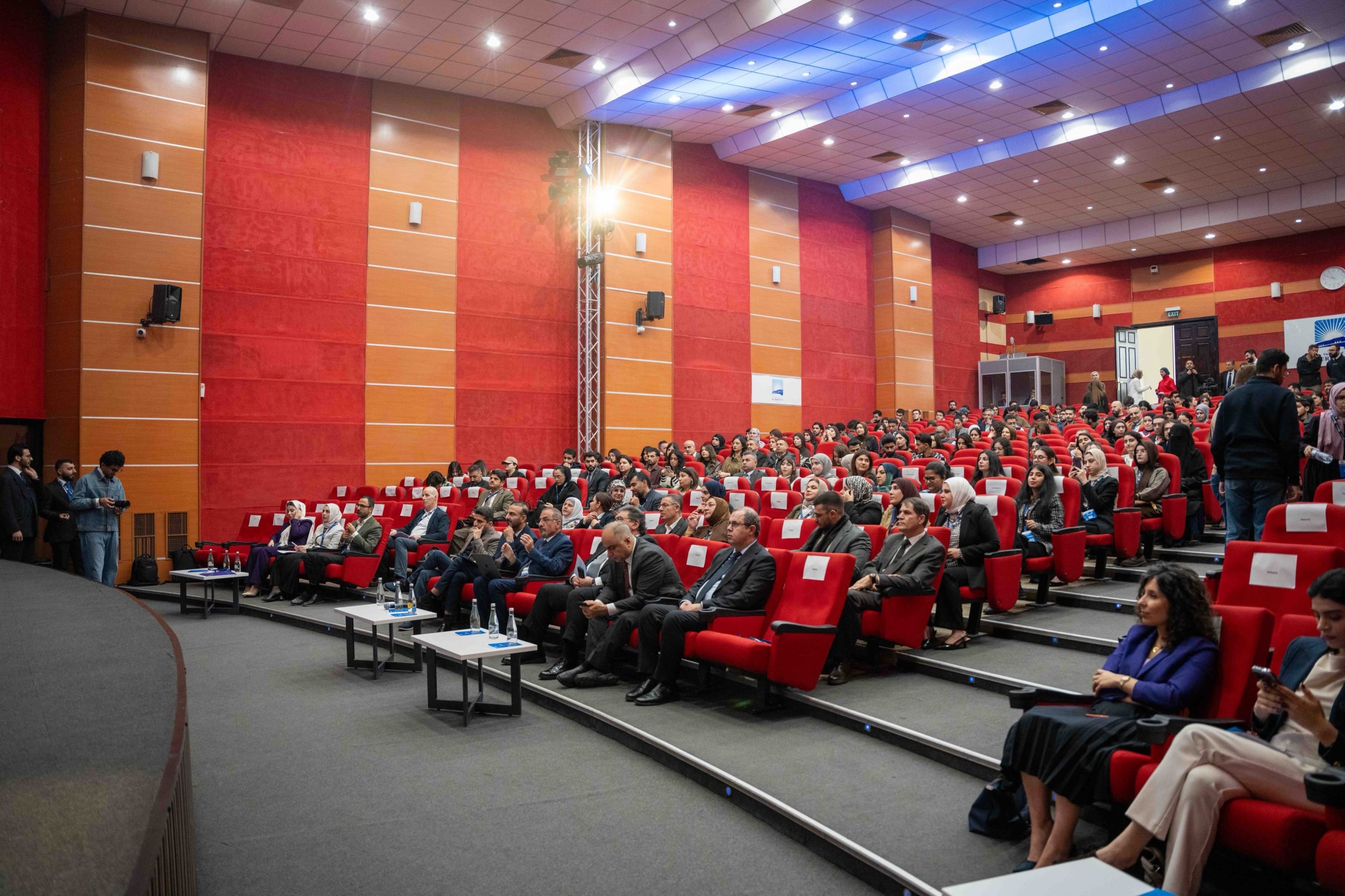
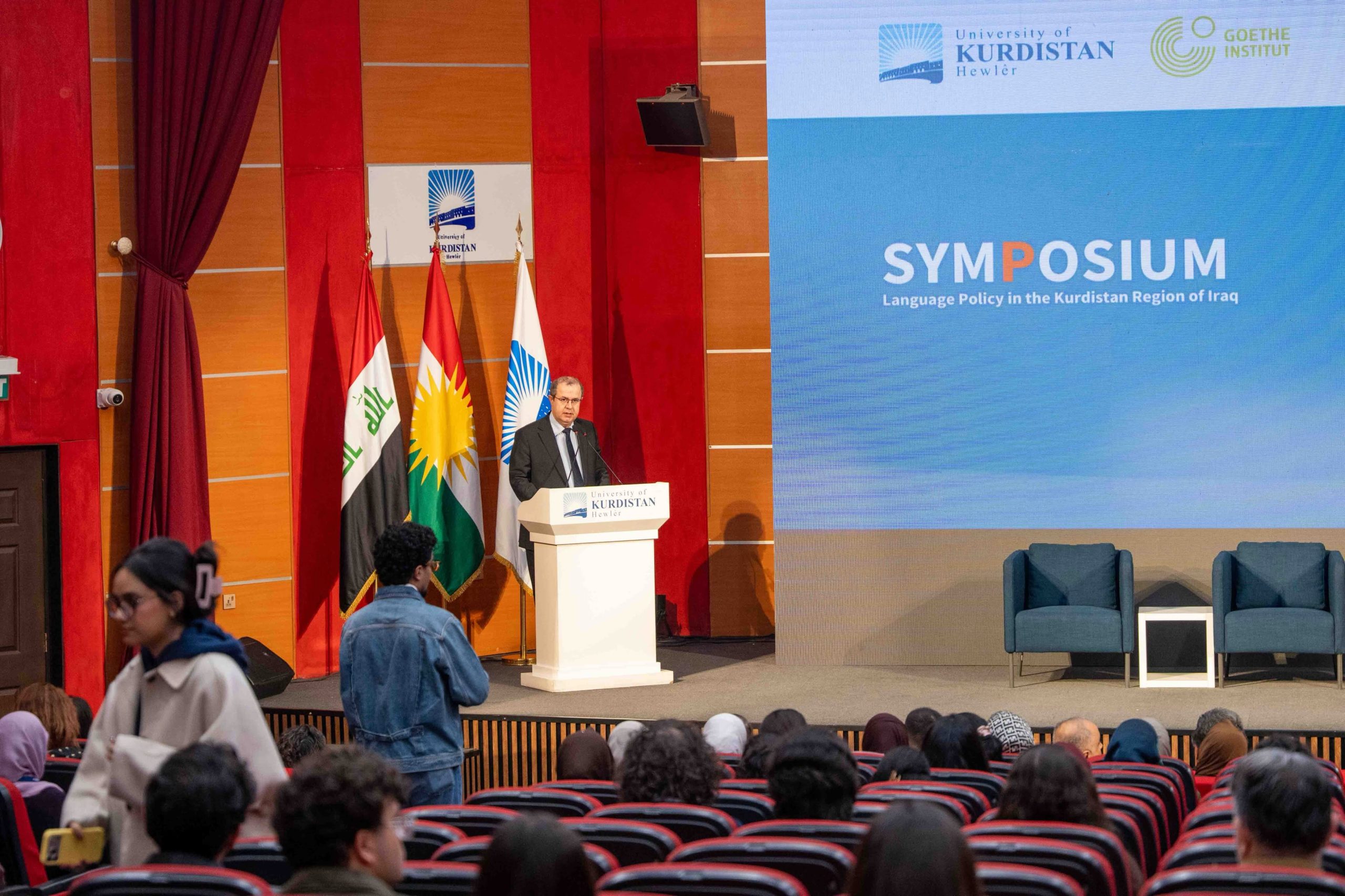
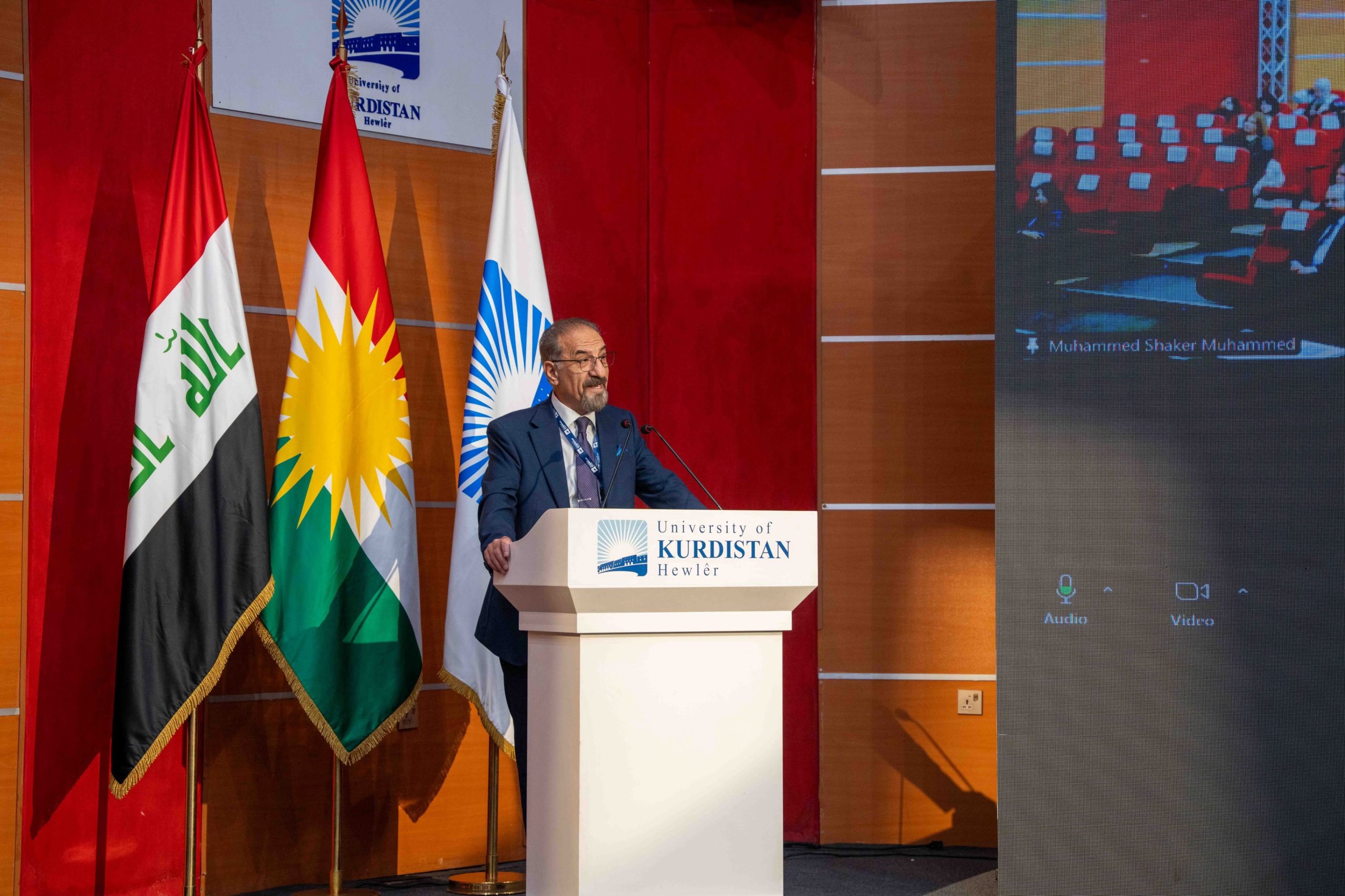
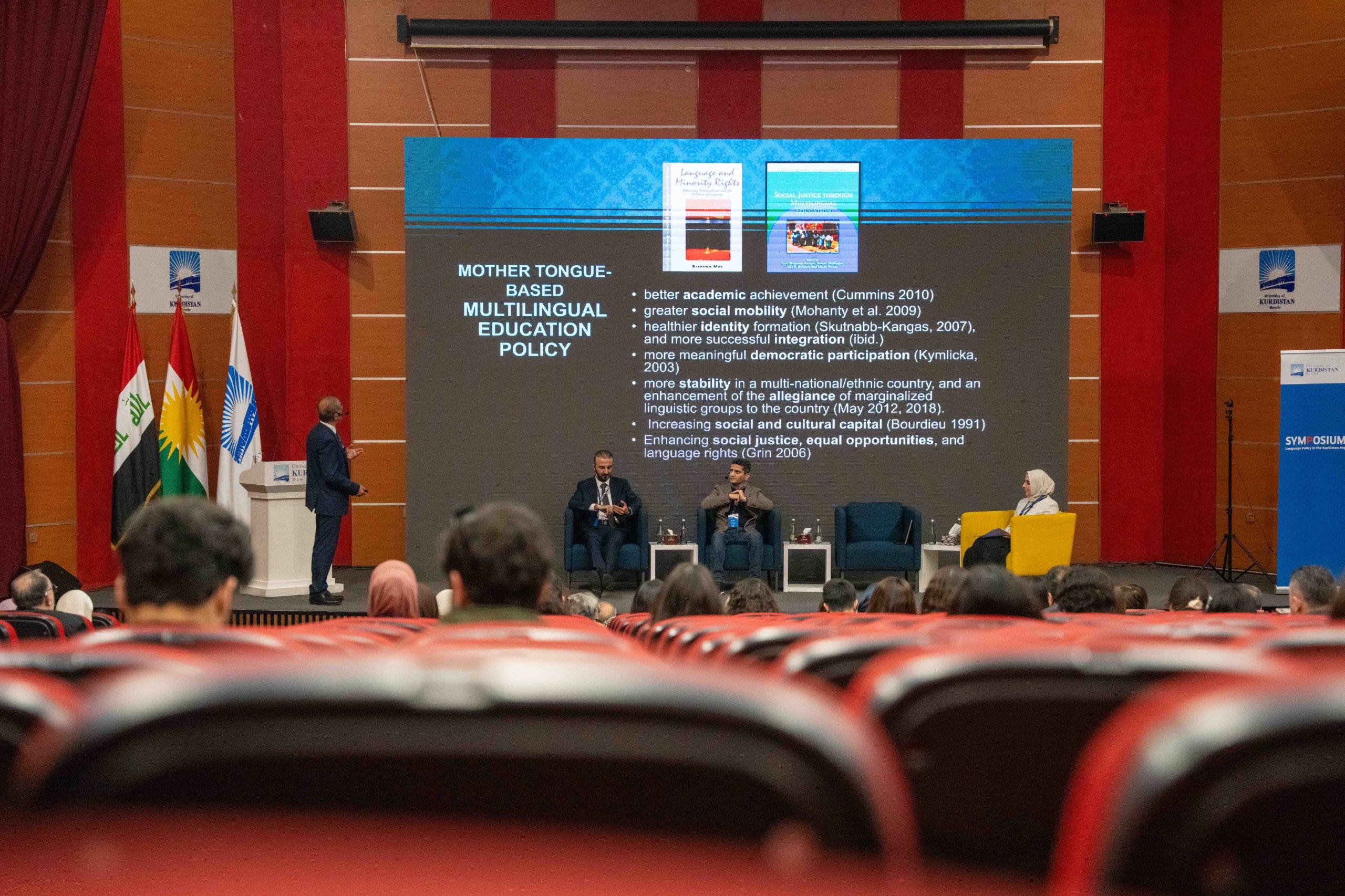
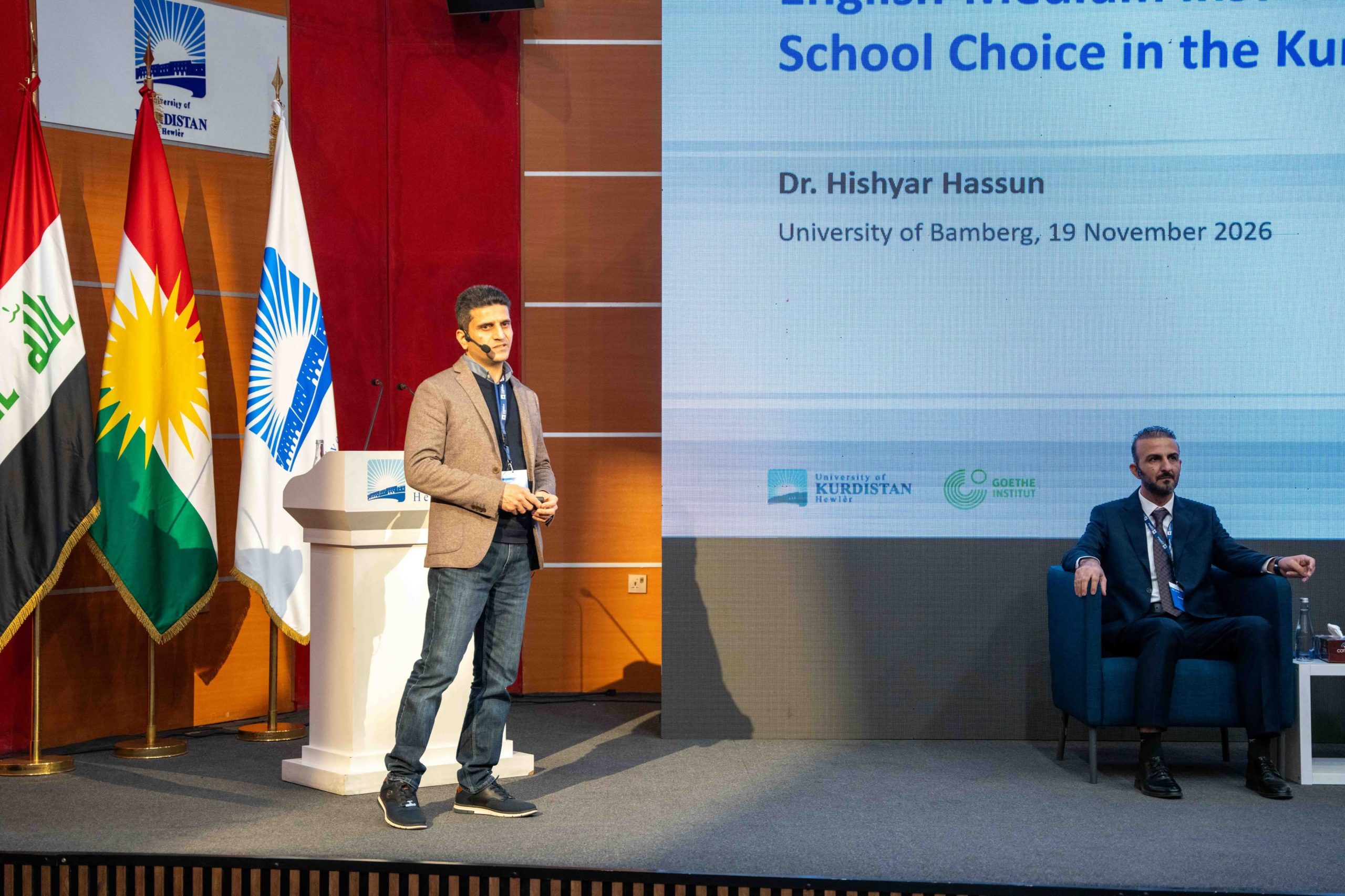
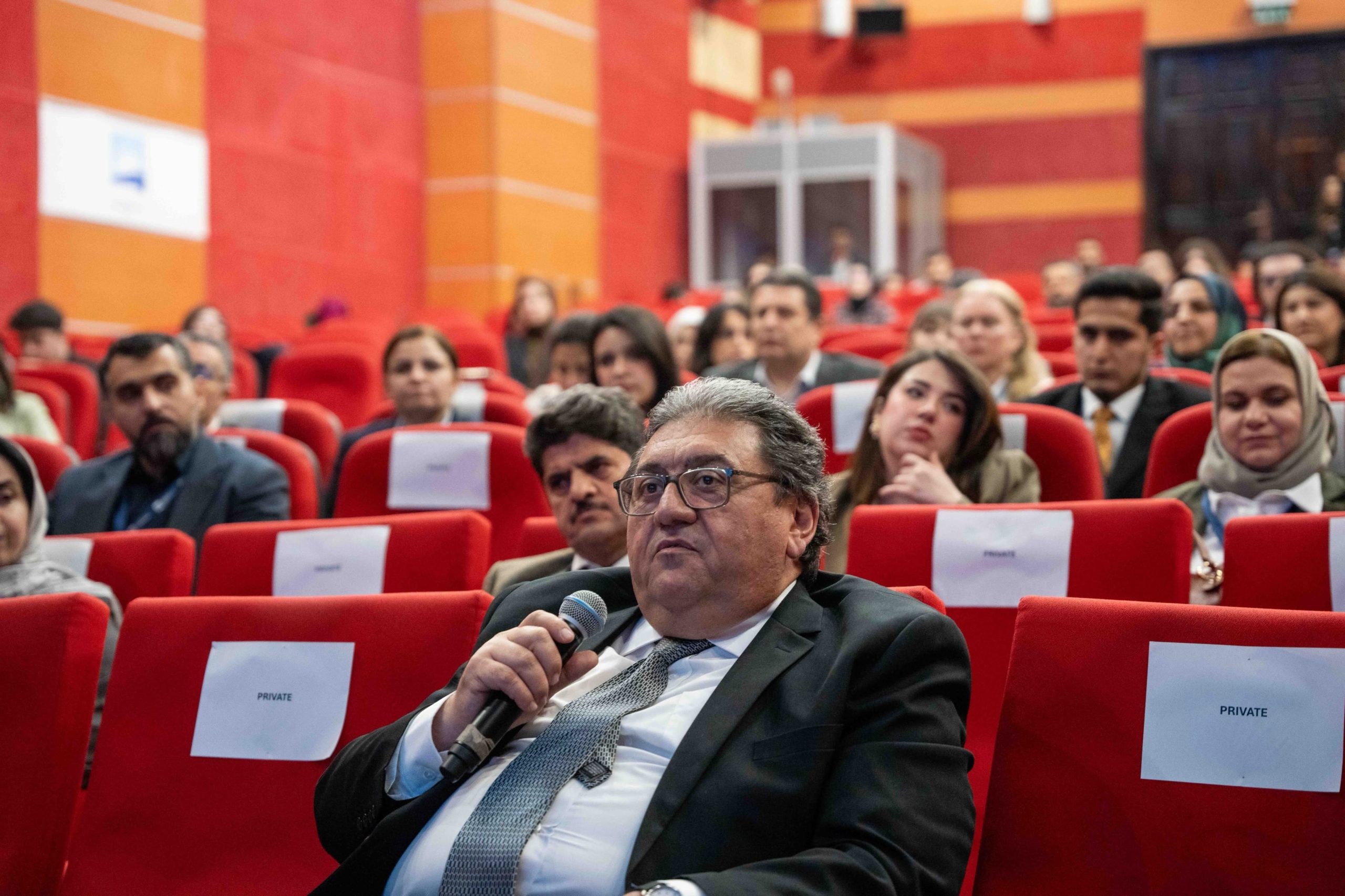
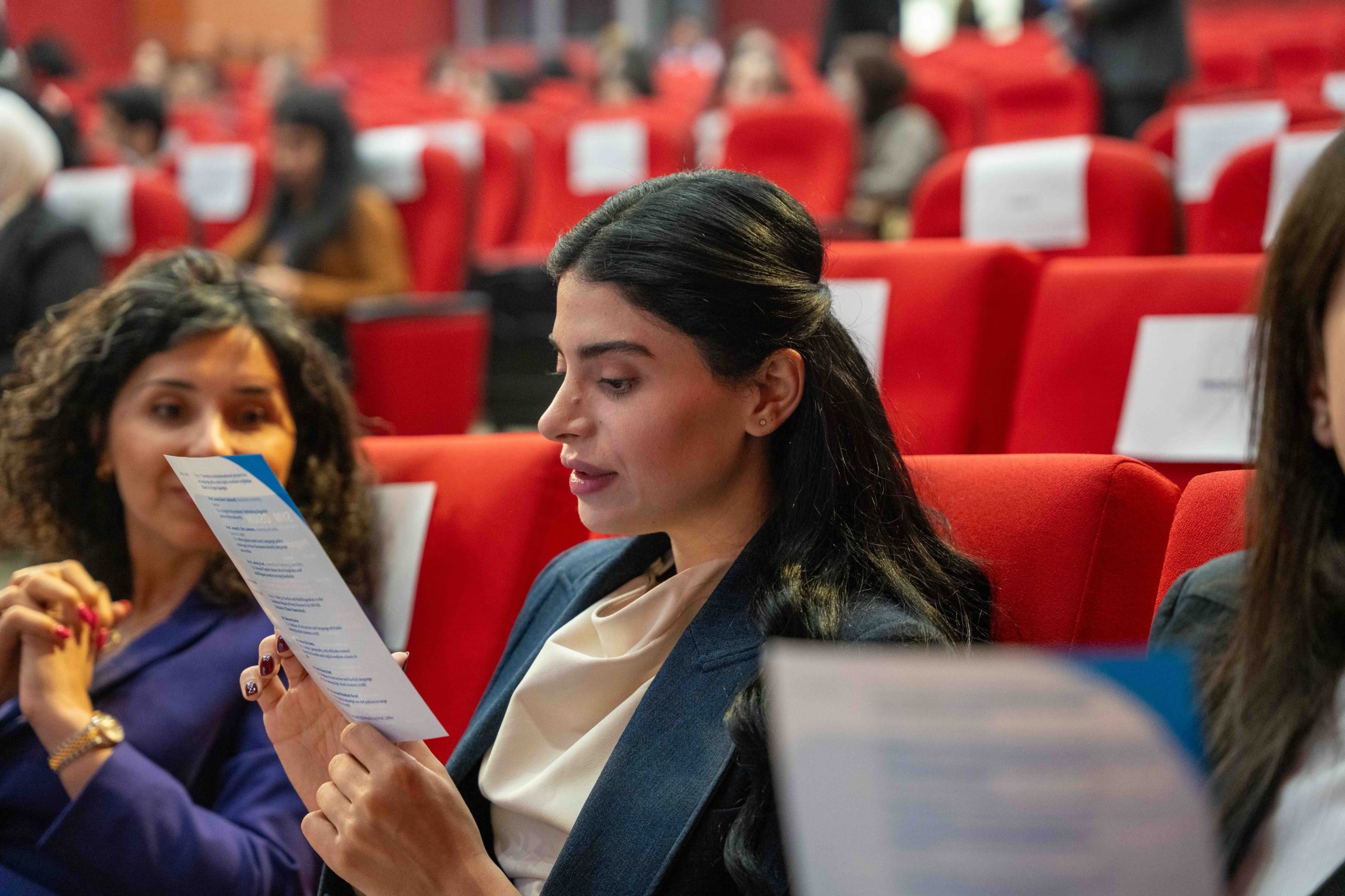
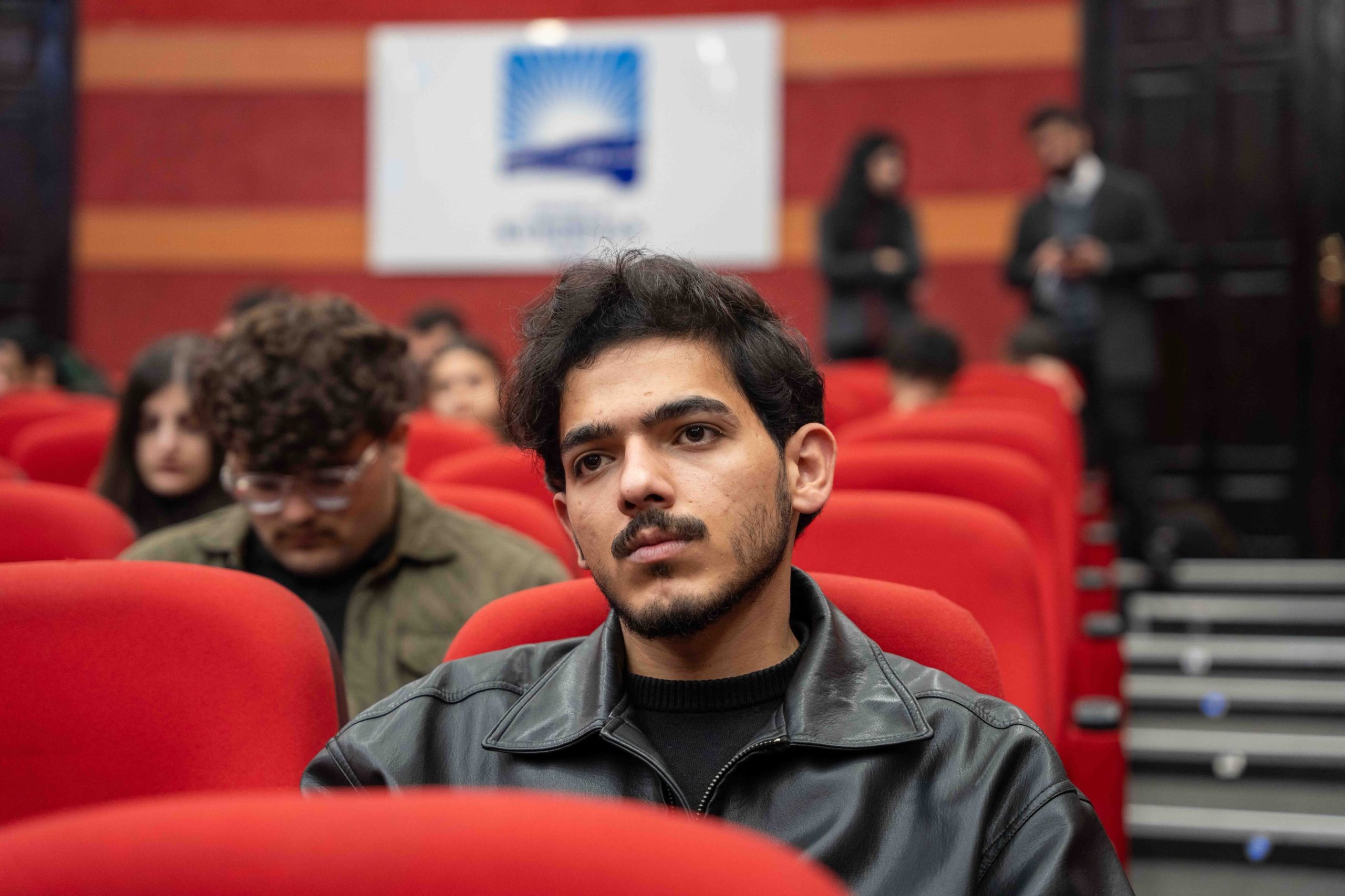
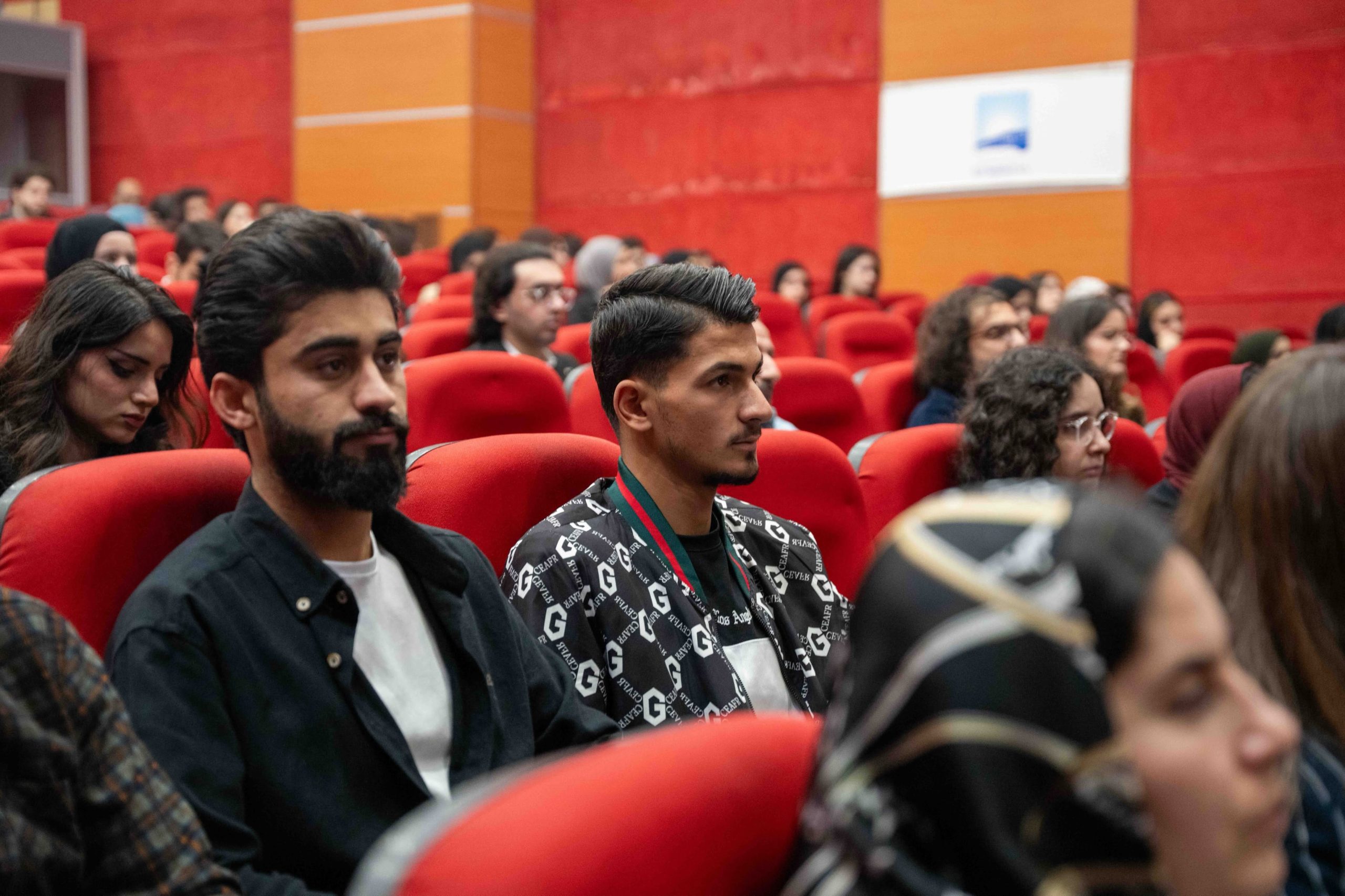
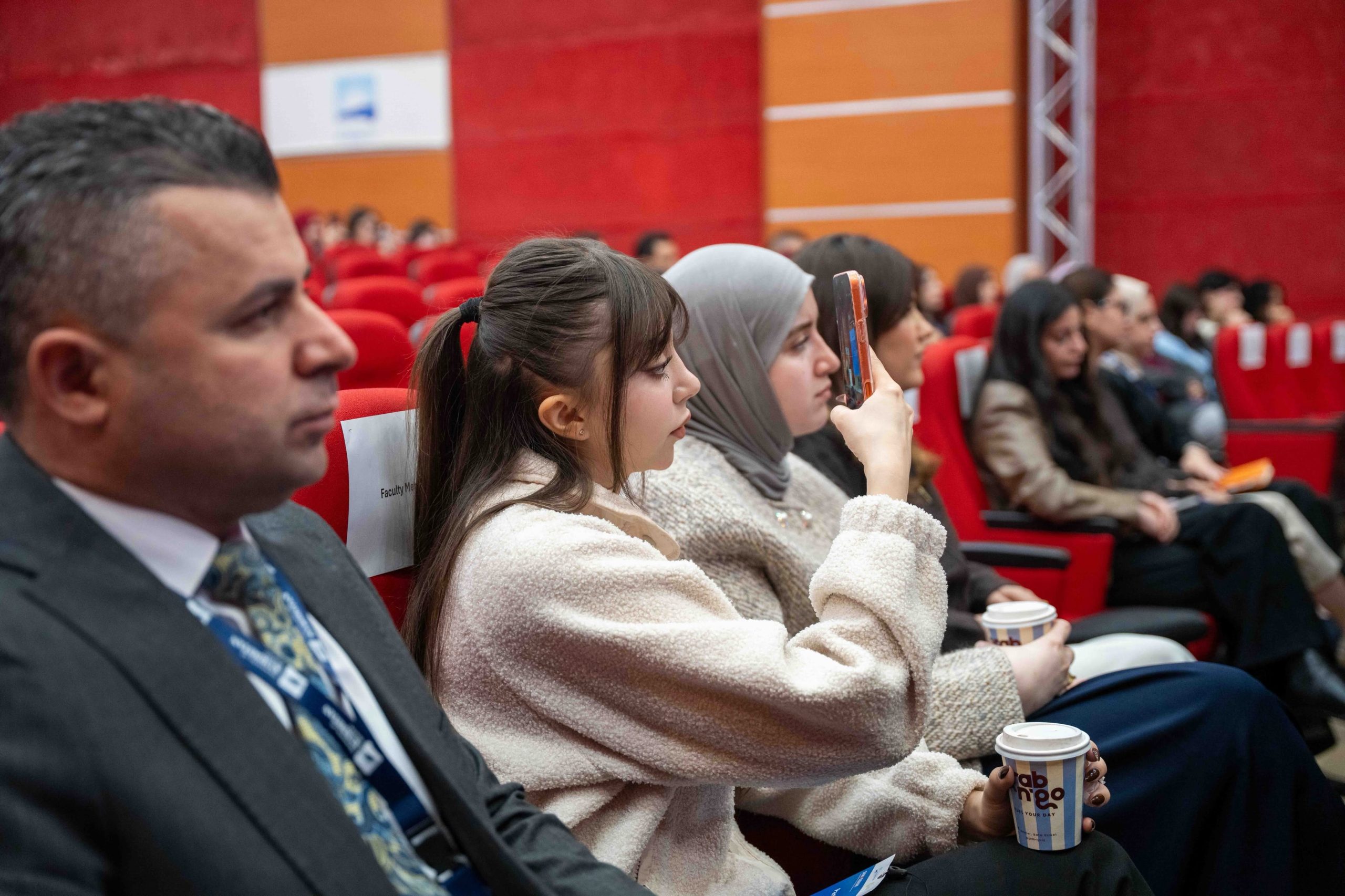
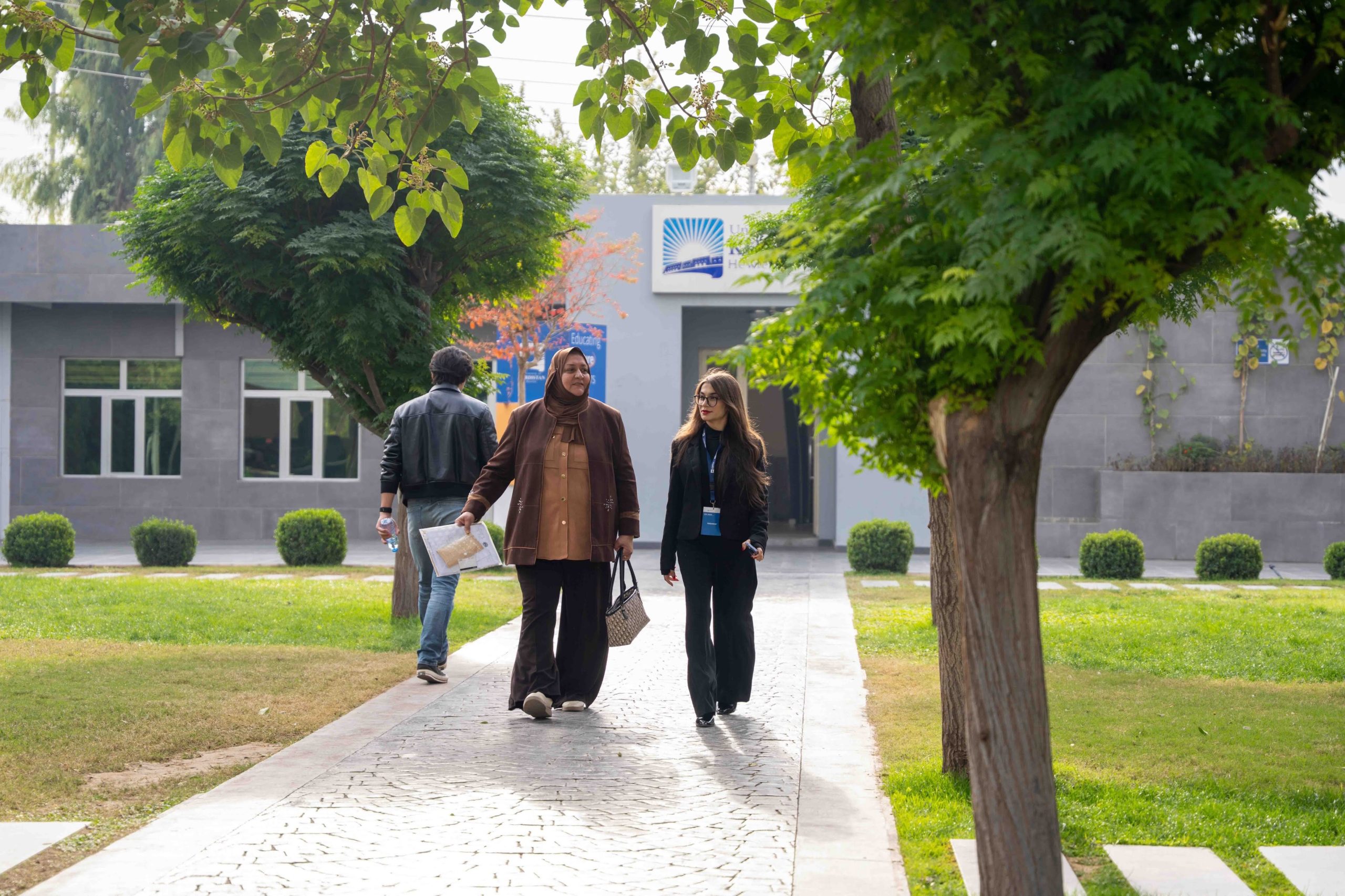
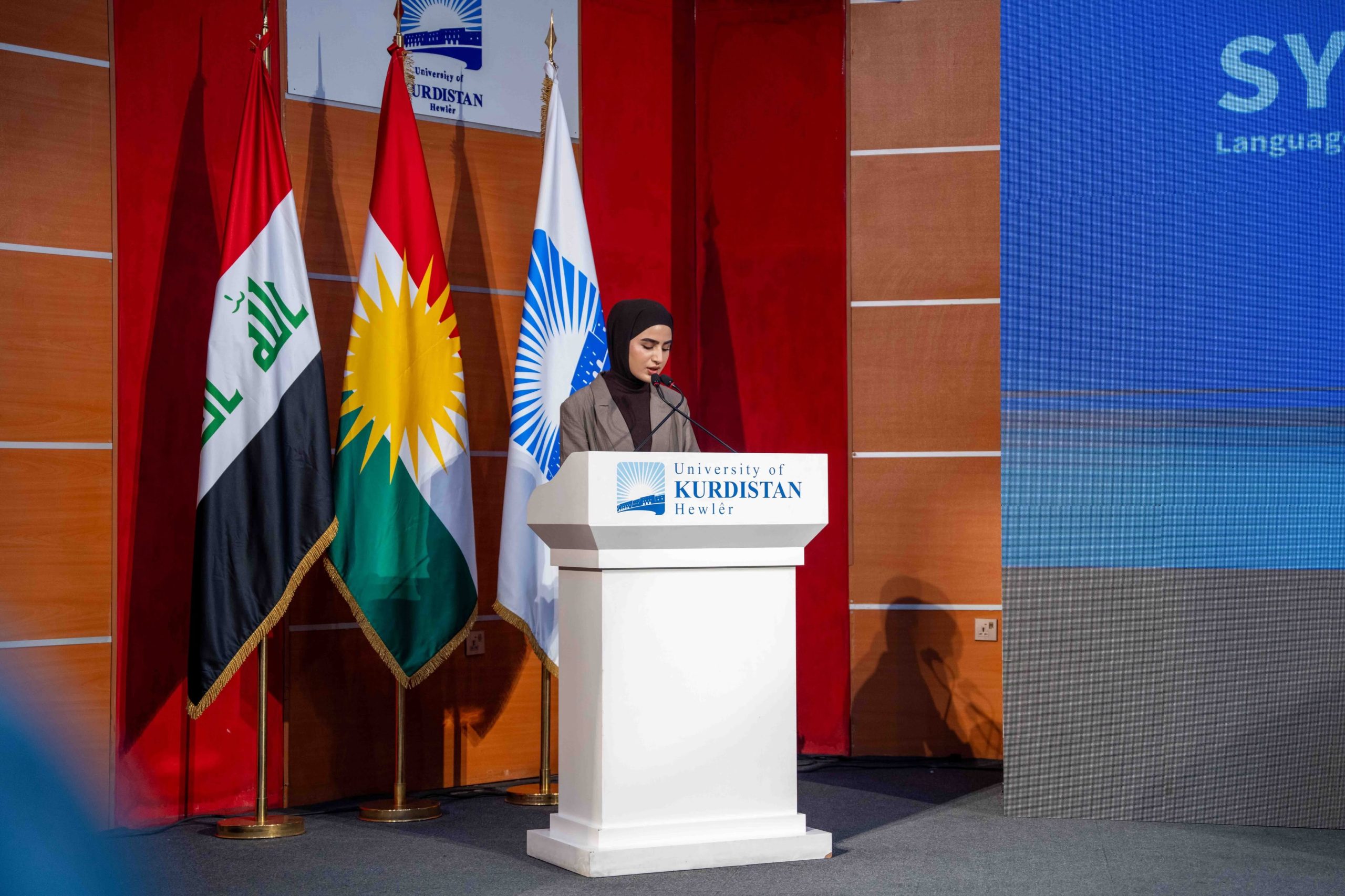
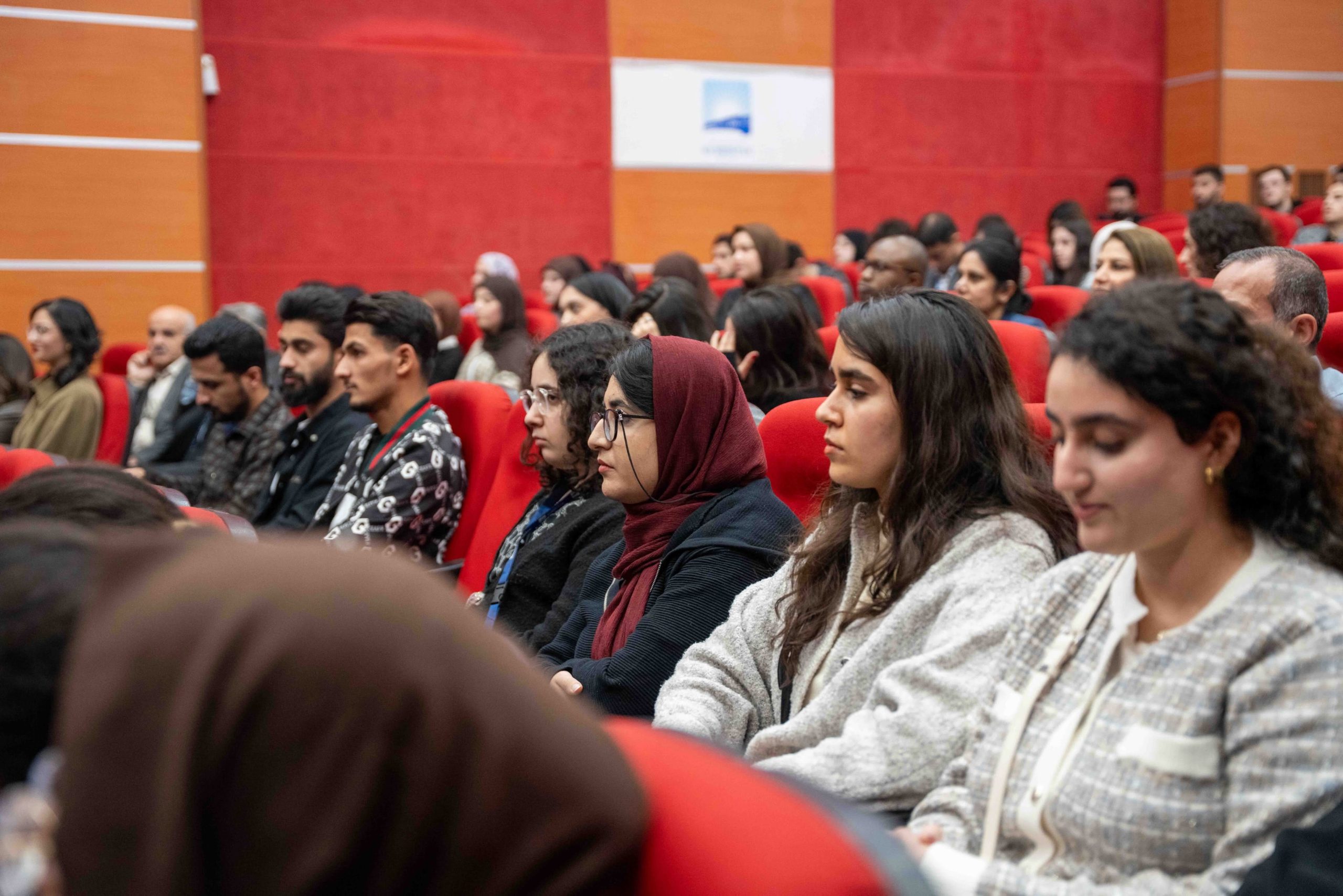
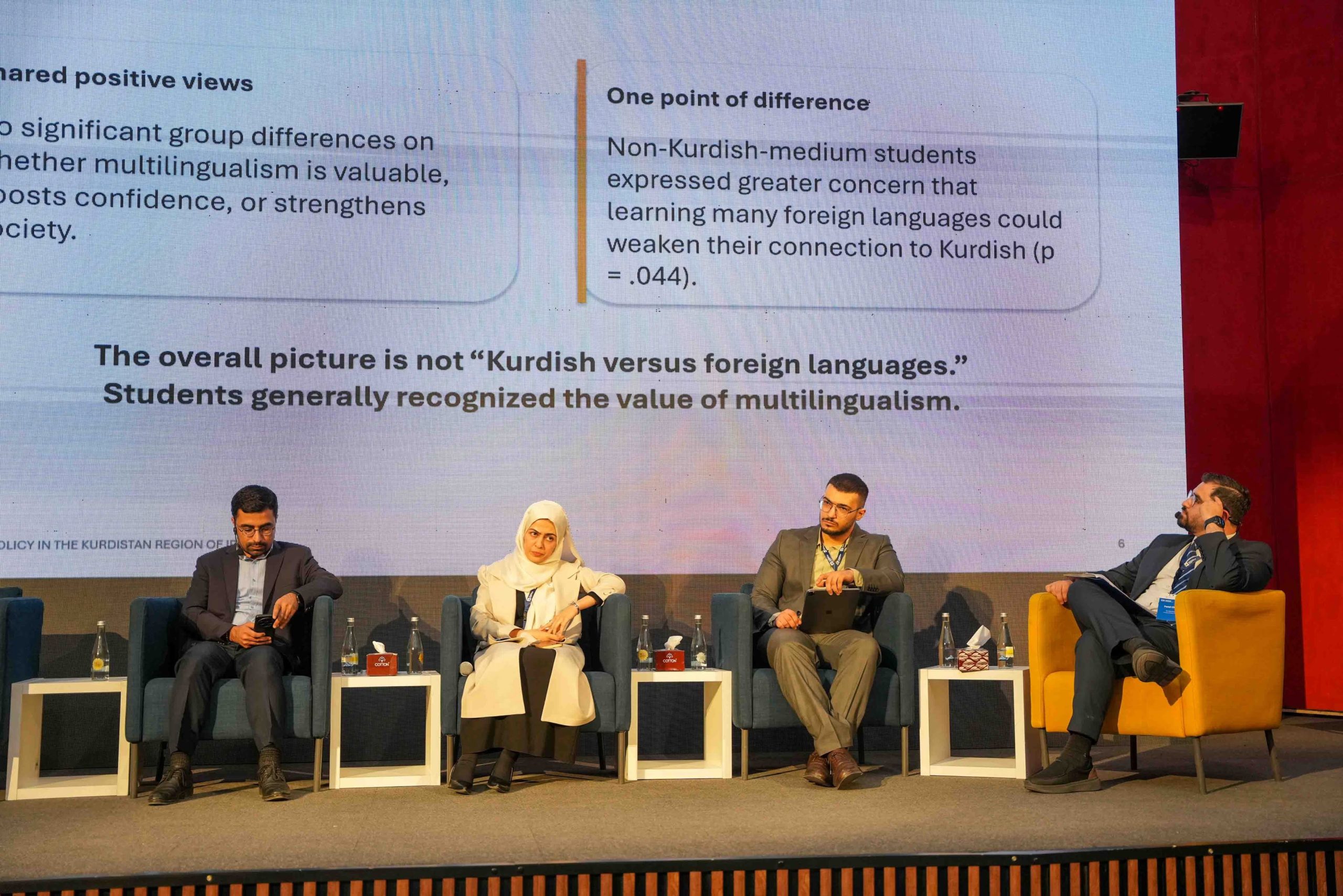
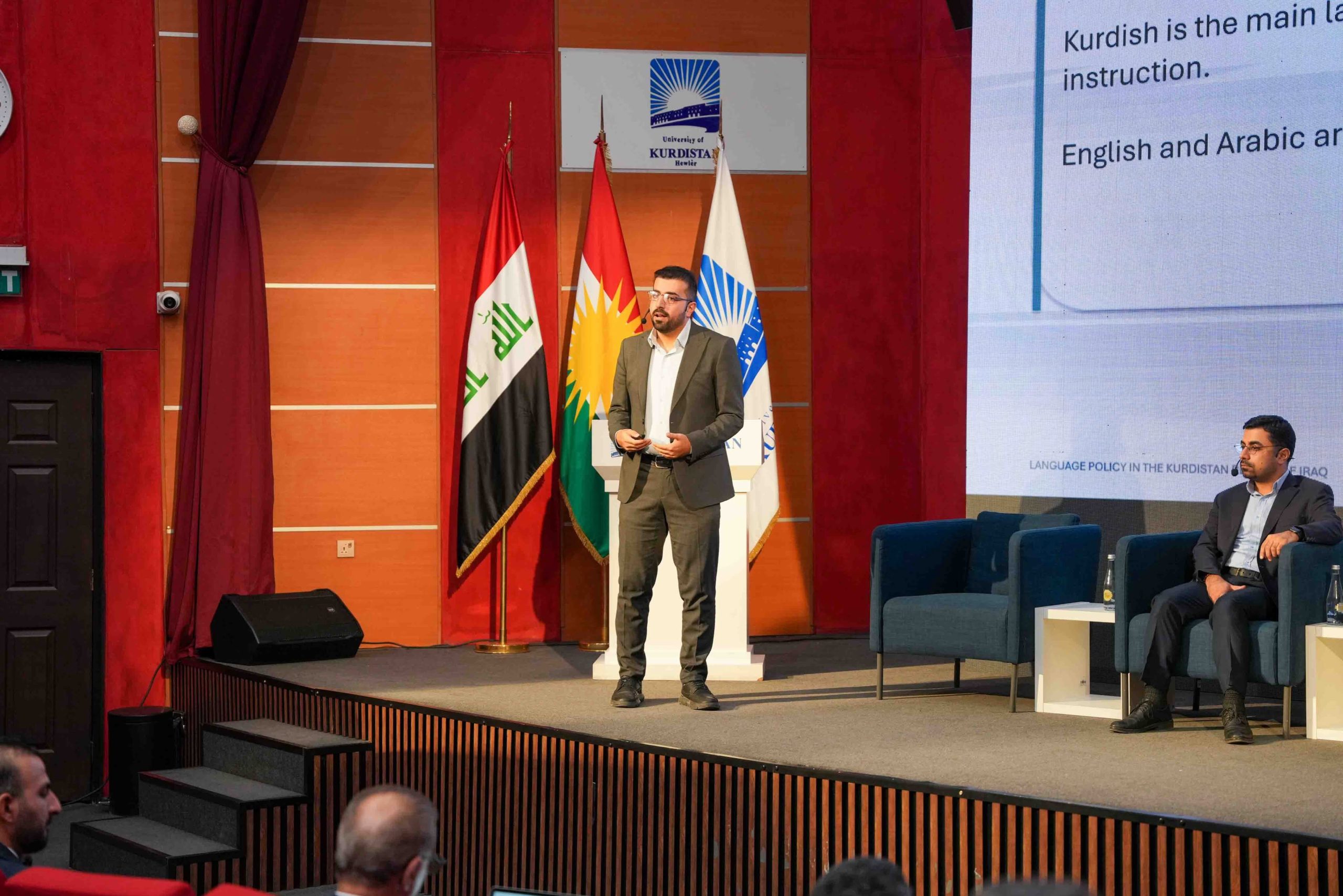
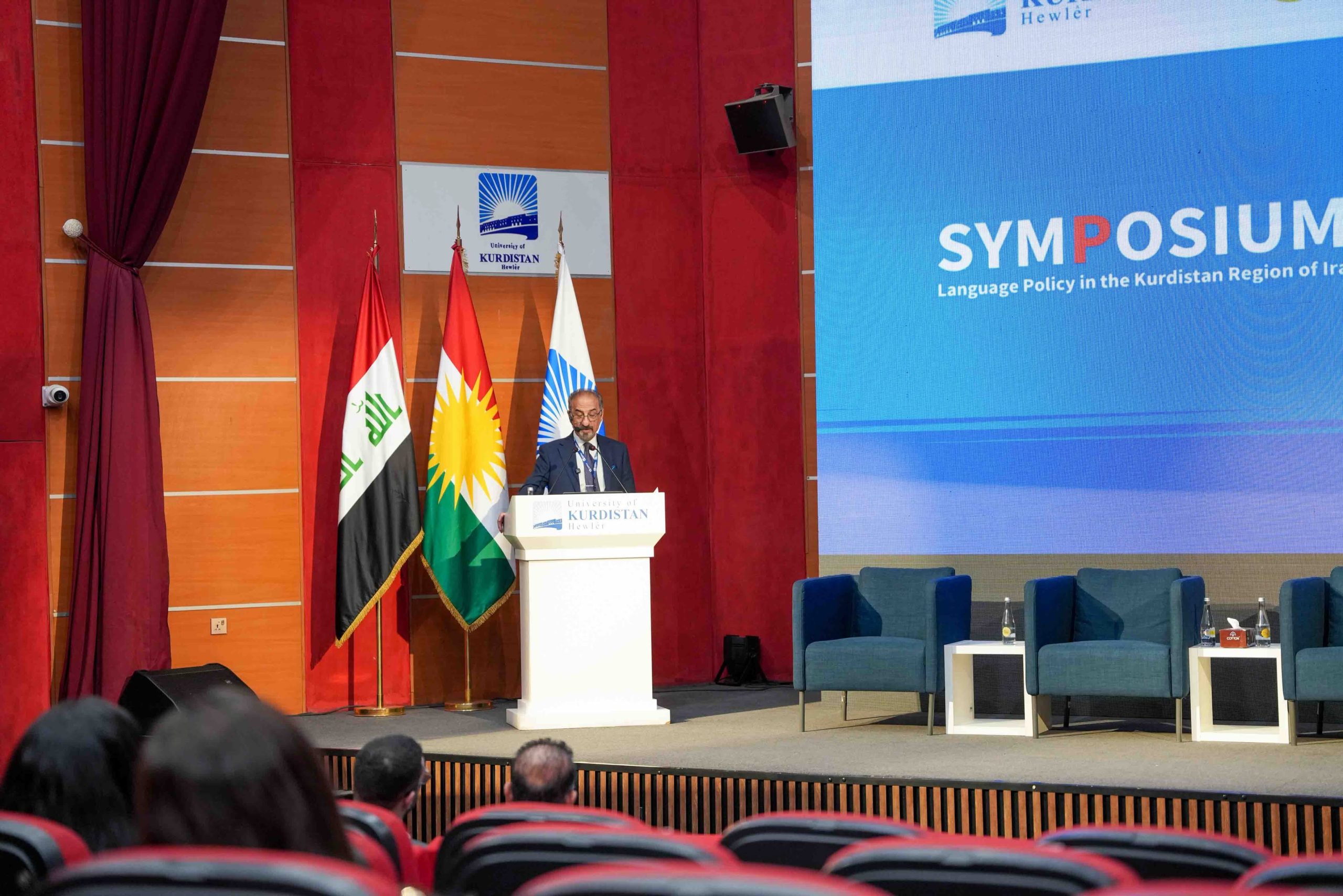
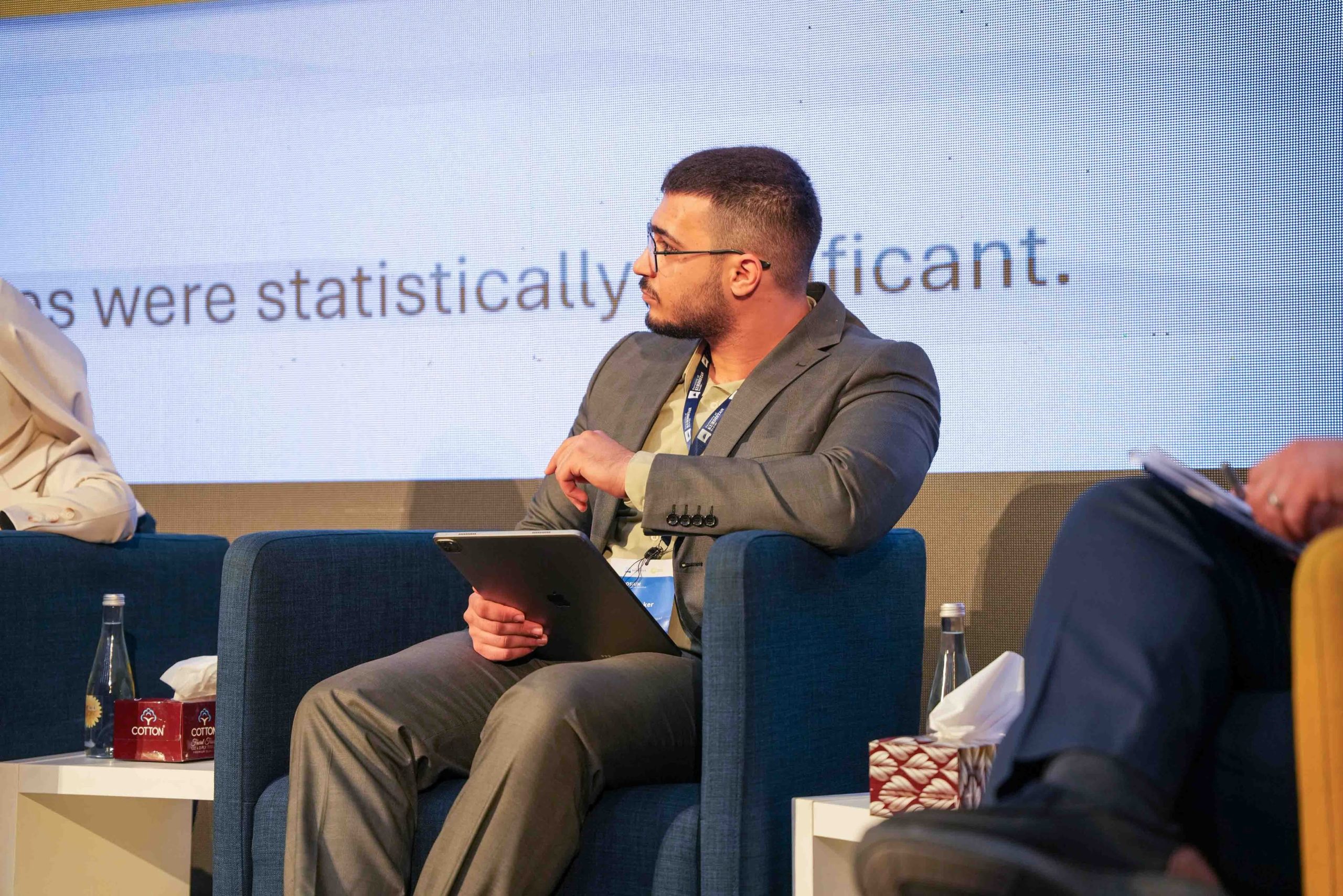
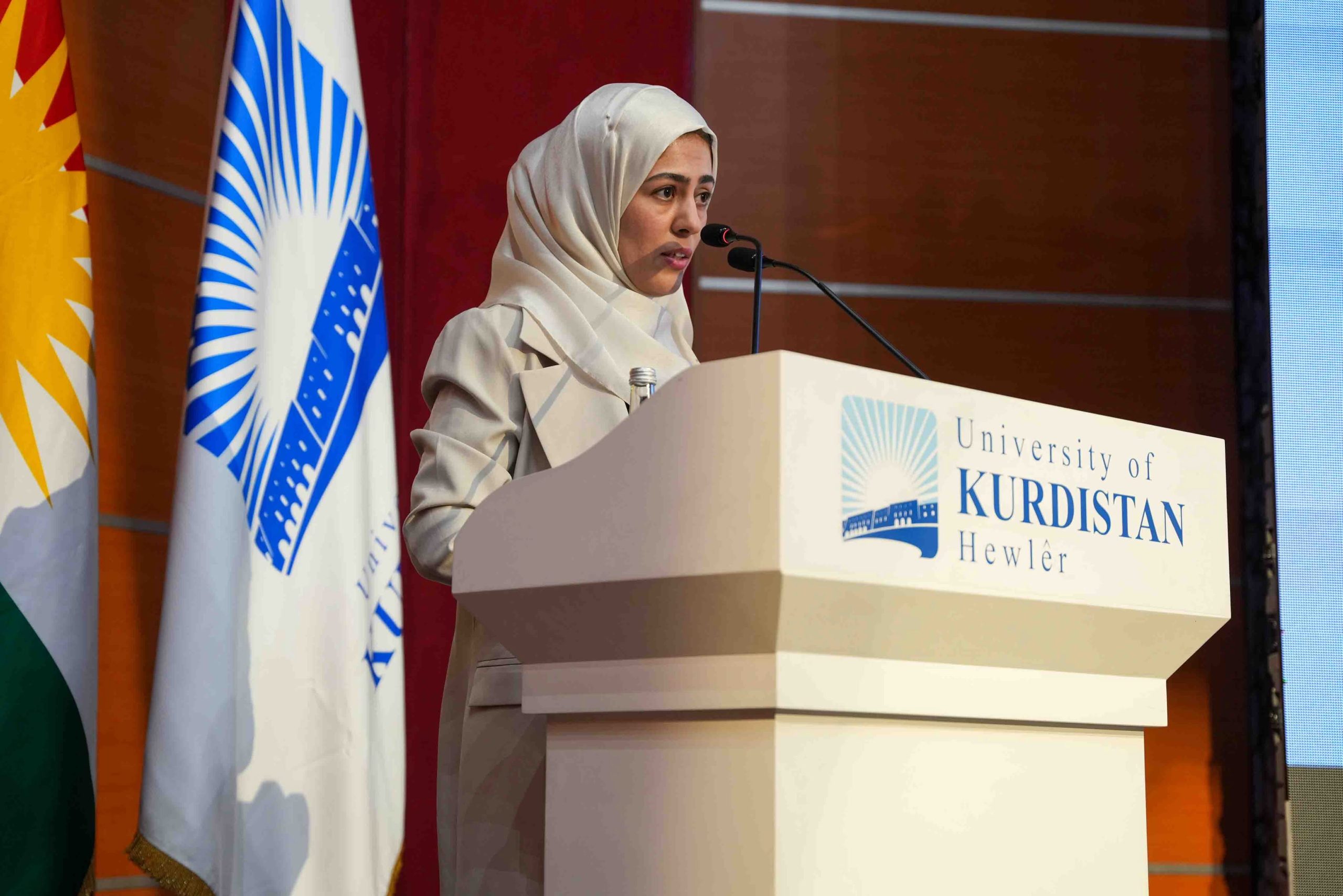
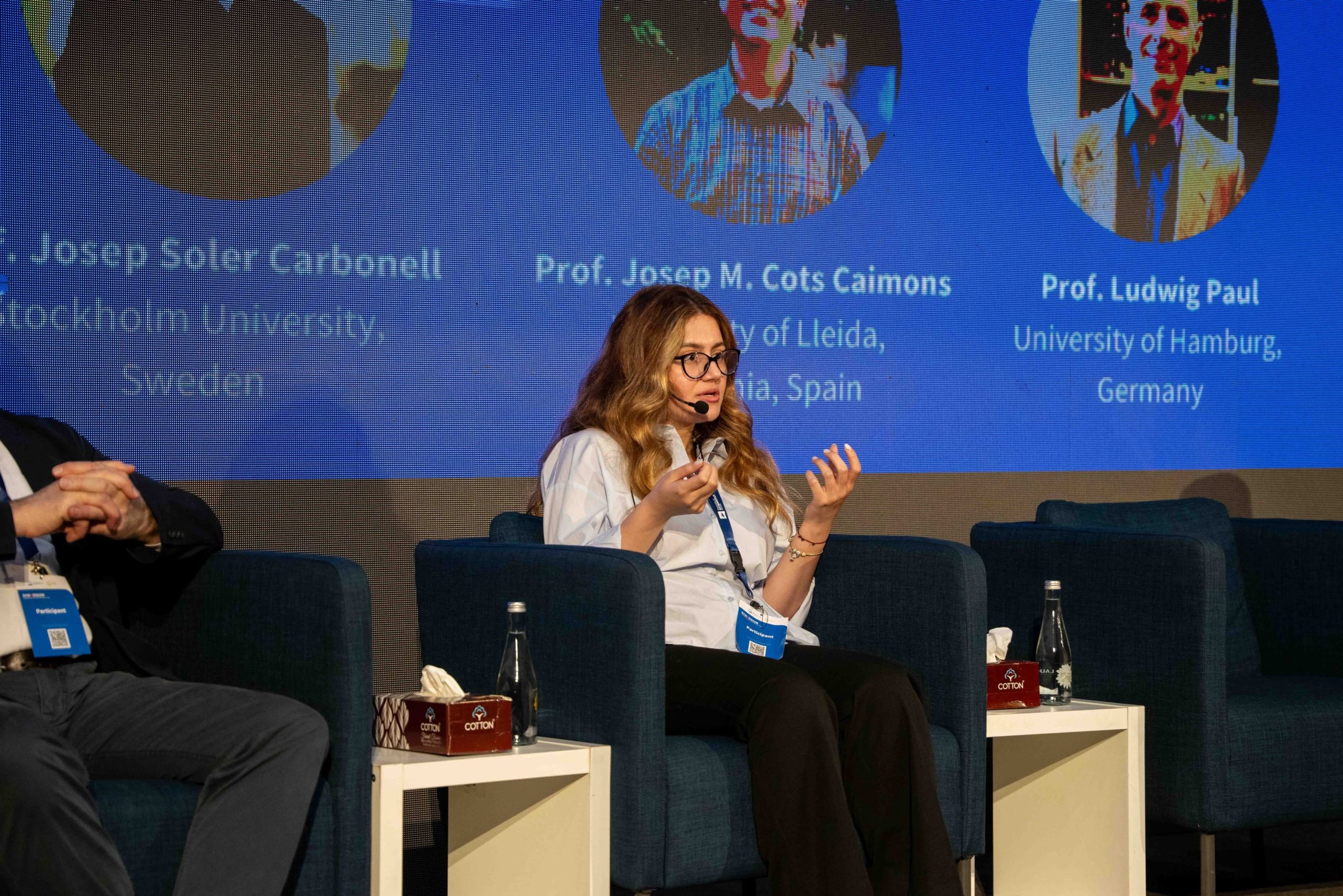
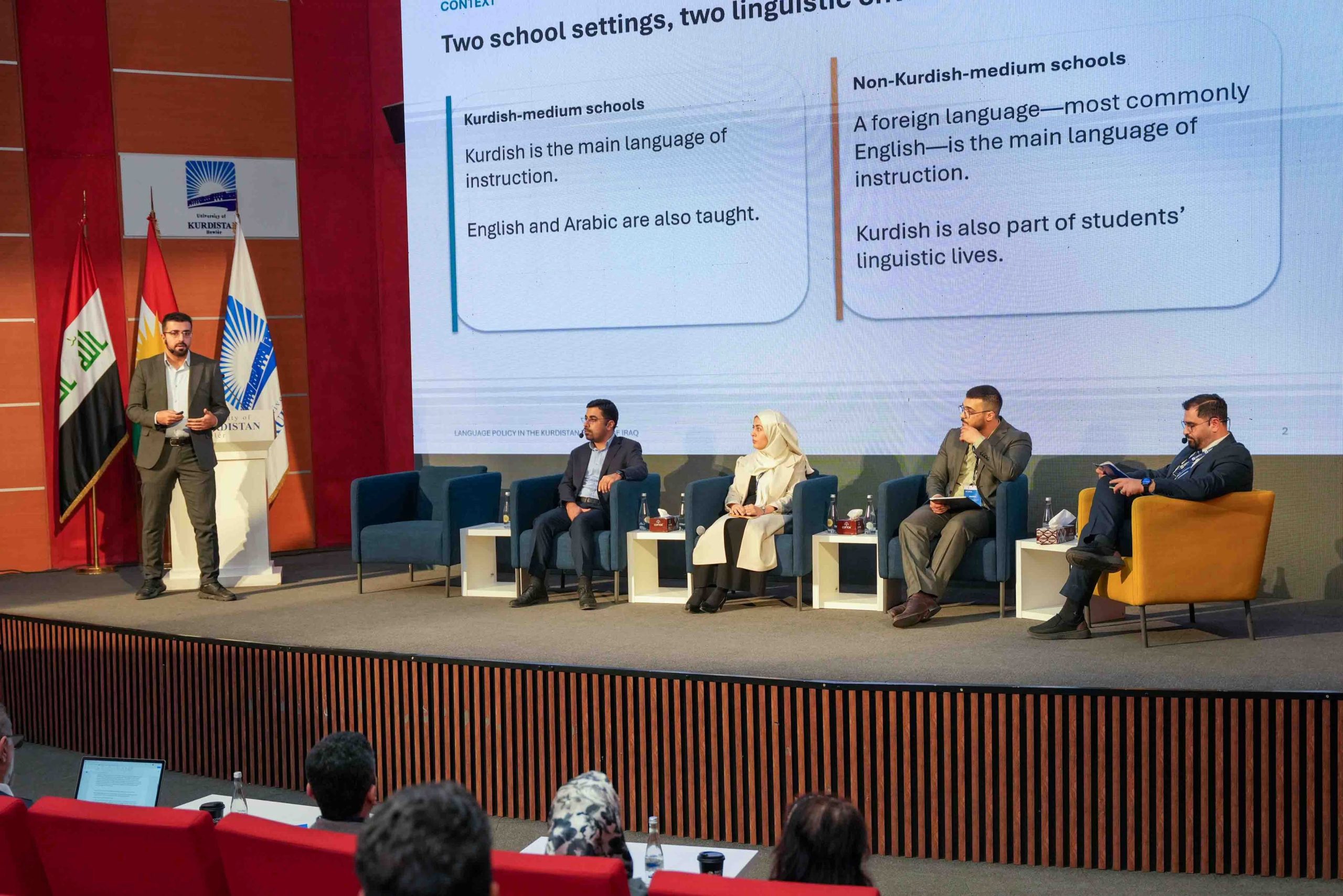
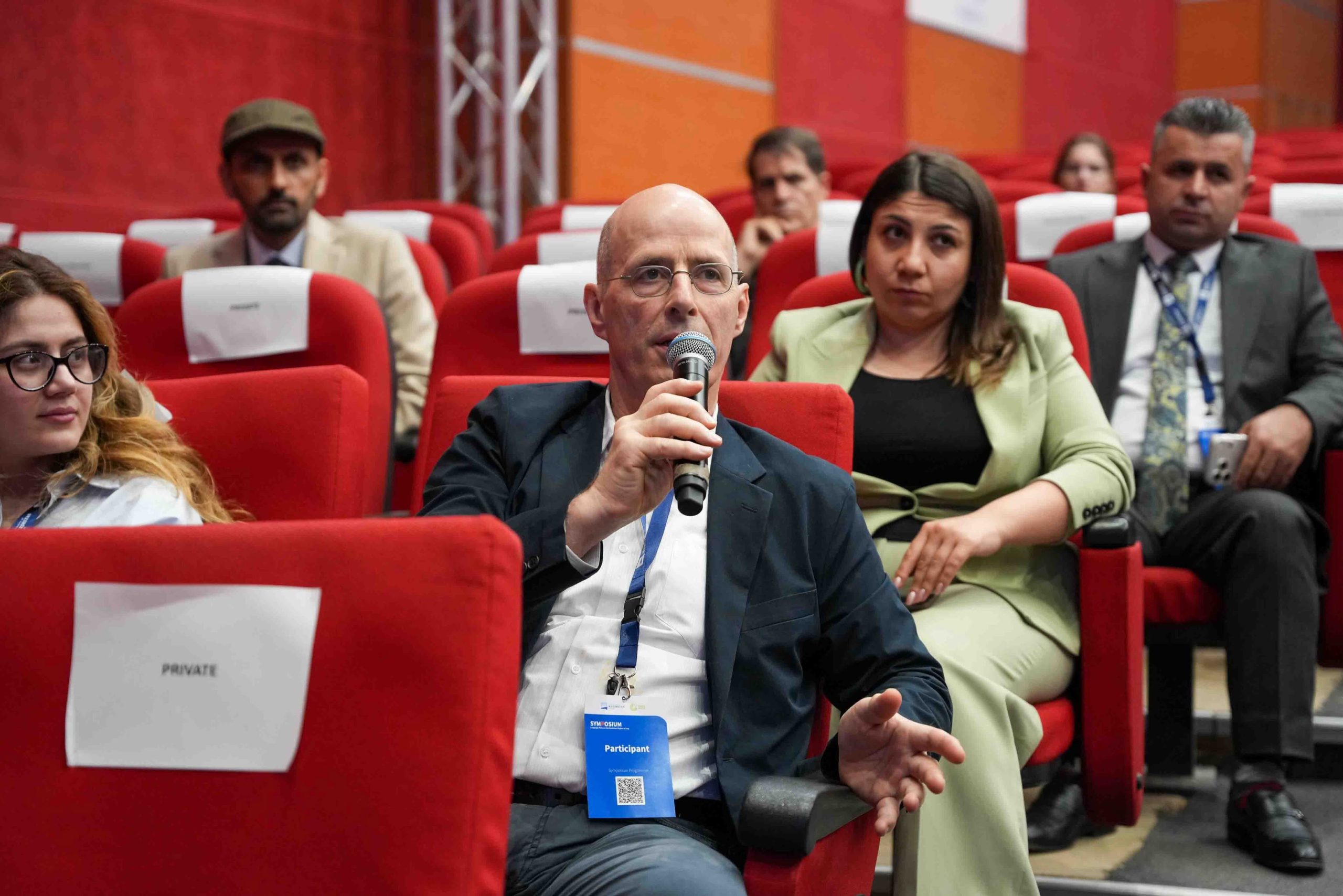
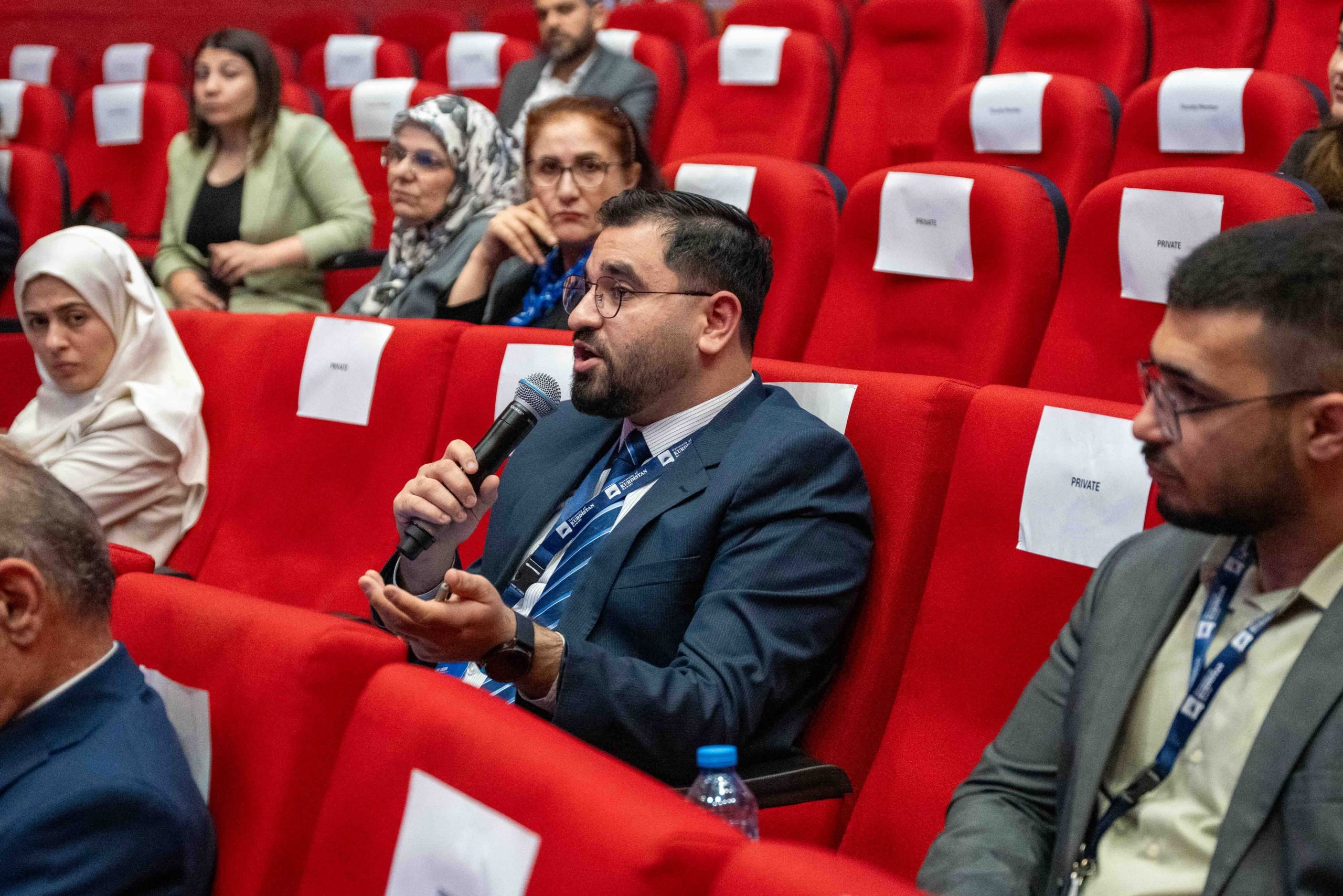
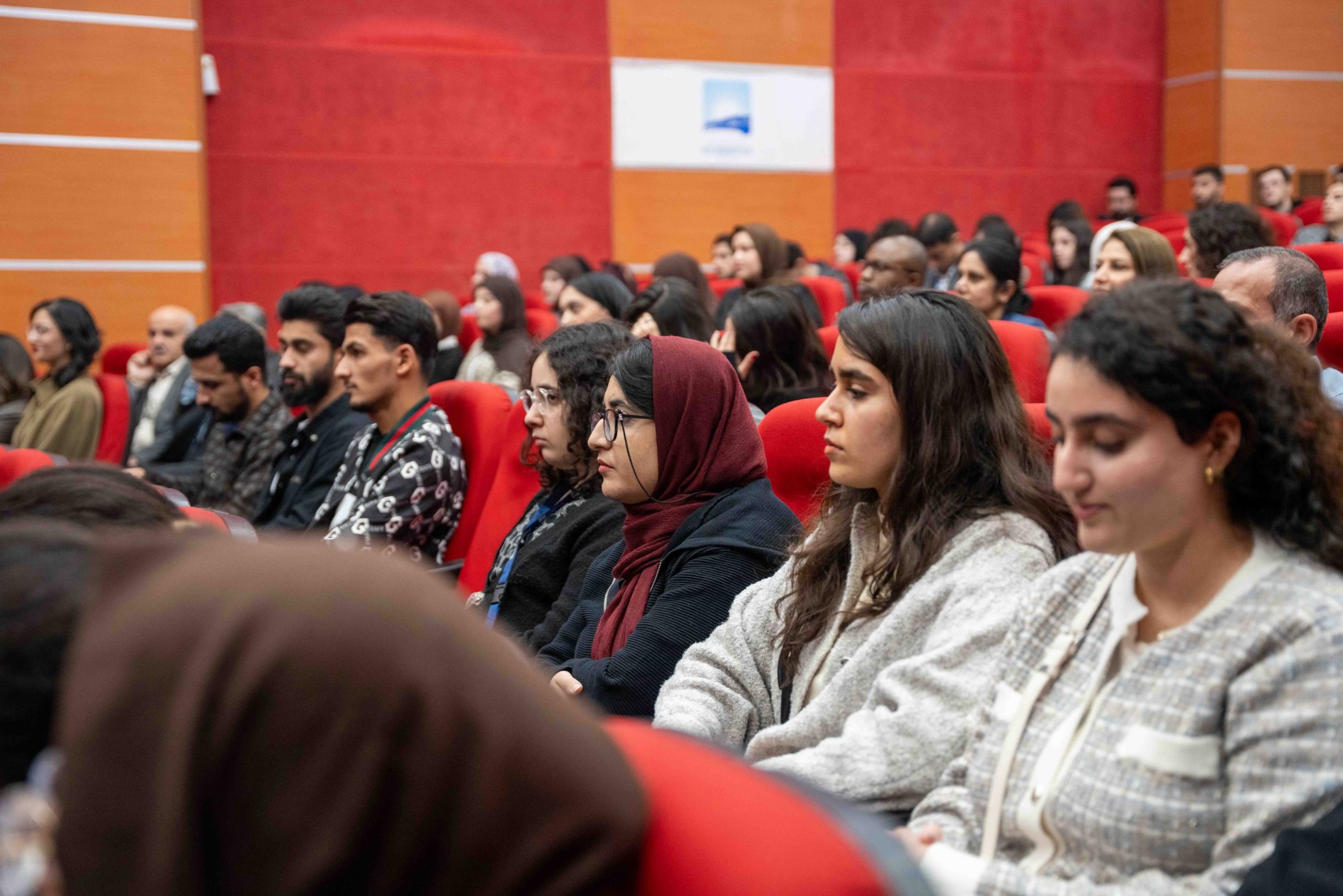
Erbil, Kurdistan Region – 19 November 2026 – The English Language Department at the University of Kurdistan Hewlêr (UKH), in partnership with the Goethe-Institut Iraq, organised a one-day symposium entitled “Language Policy in the Kurdistan Region of Iraq”, bringing together local and international academics, researchers, and experts to examine language policy, multilingual education, and the future of language planning in the Kurdistan Region.
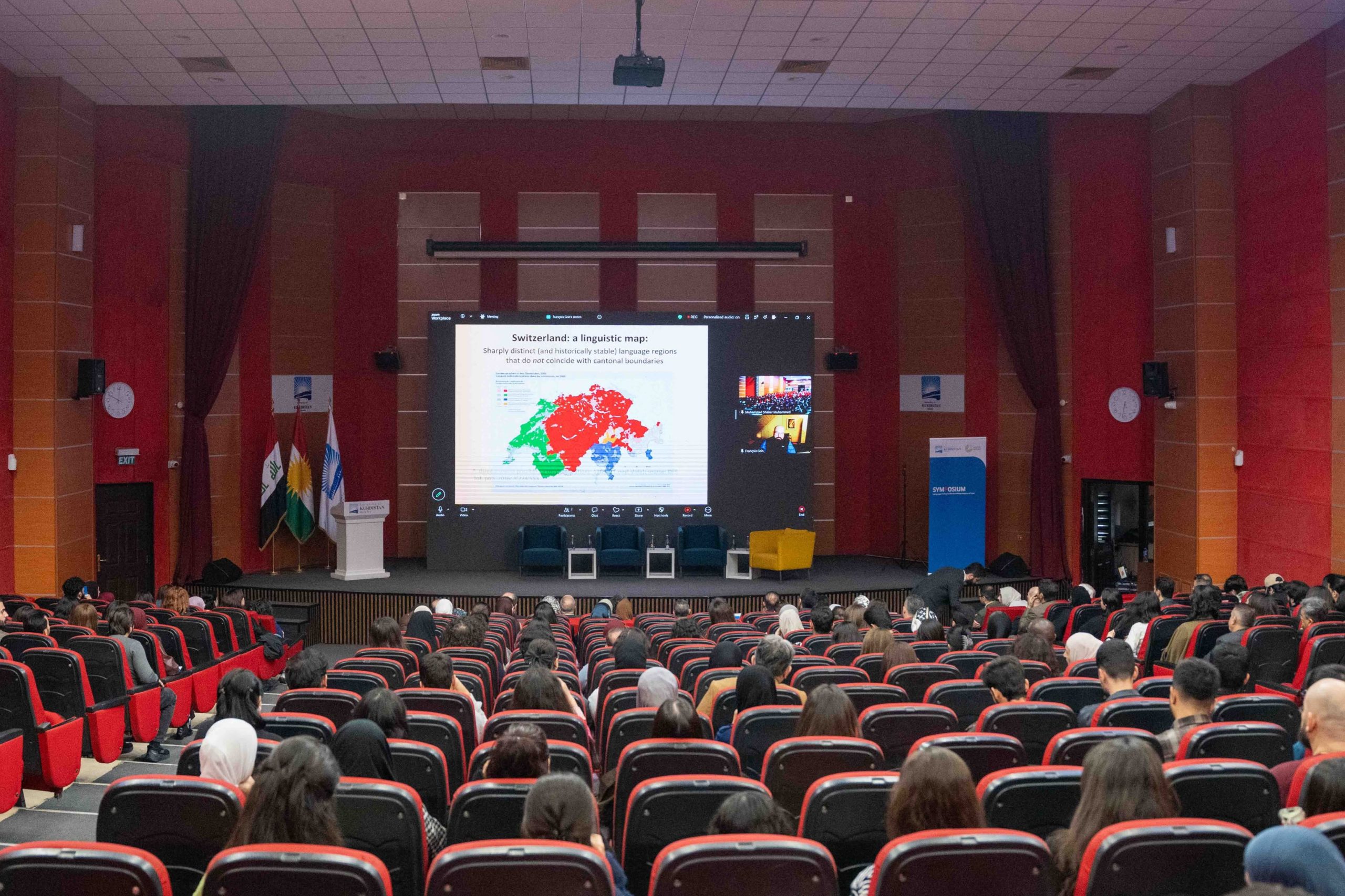
The symposium opened with remarks by Dr. Zana Ibrahim, President of UKH, followed by a keynote address from Professor François Grin of the University of Geneva, who explored whether Switzerland’s model of institutional multilingualism could be applied elsewhere, examining the key conditions behind this distinctive arrangement.
The programme featured three panels addressing different dimensions of language policy. The first examined language policy in education in the Kurdistan Region, with discussions on English-medium instruction, language ideologies, educational choices, and the role of multilingual education in balancing indigenous language preservation, civic participation, and global competitiveness.
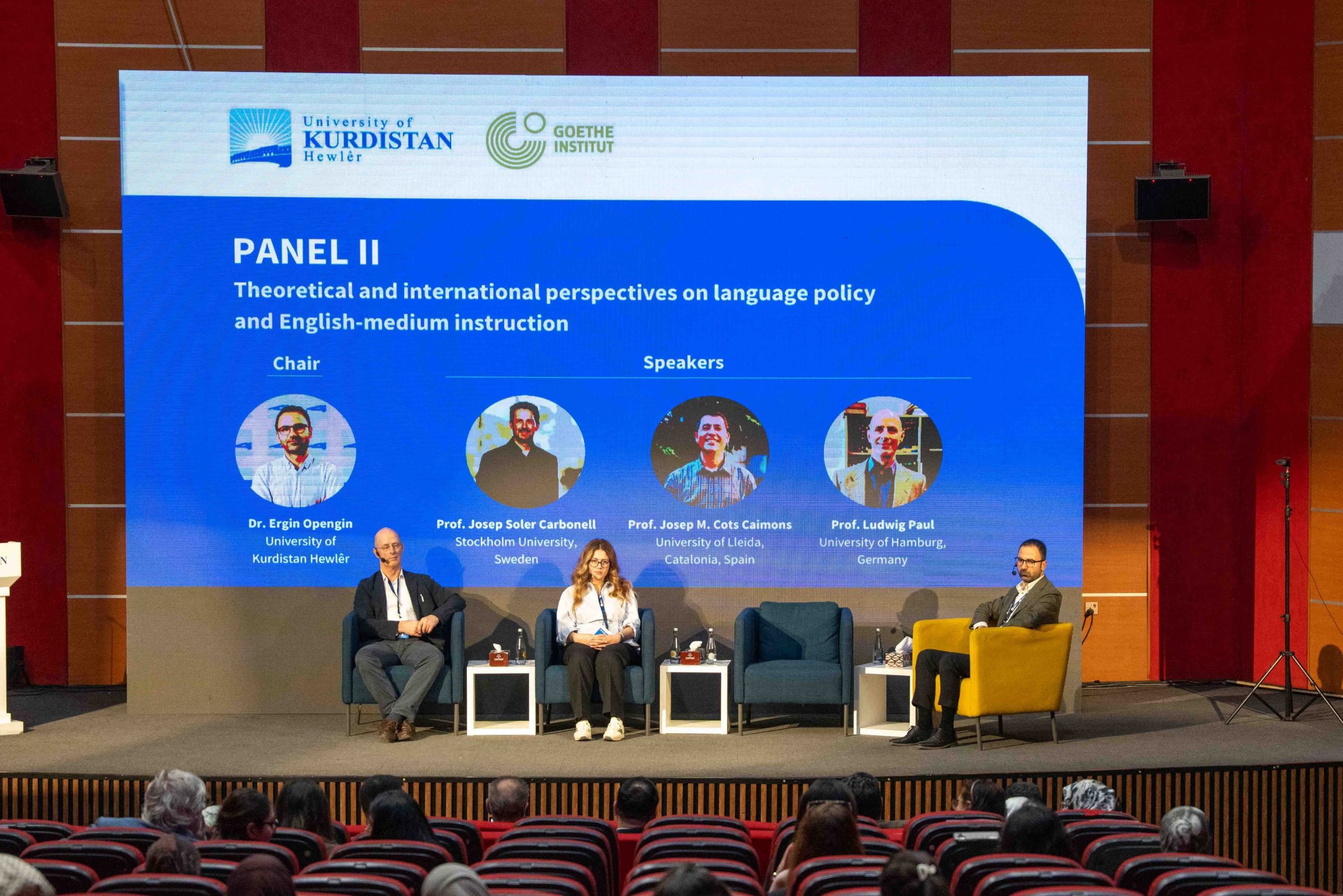
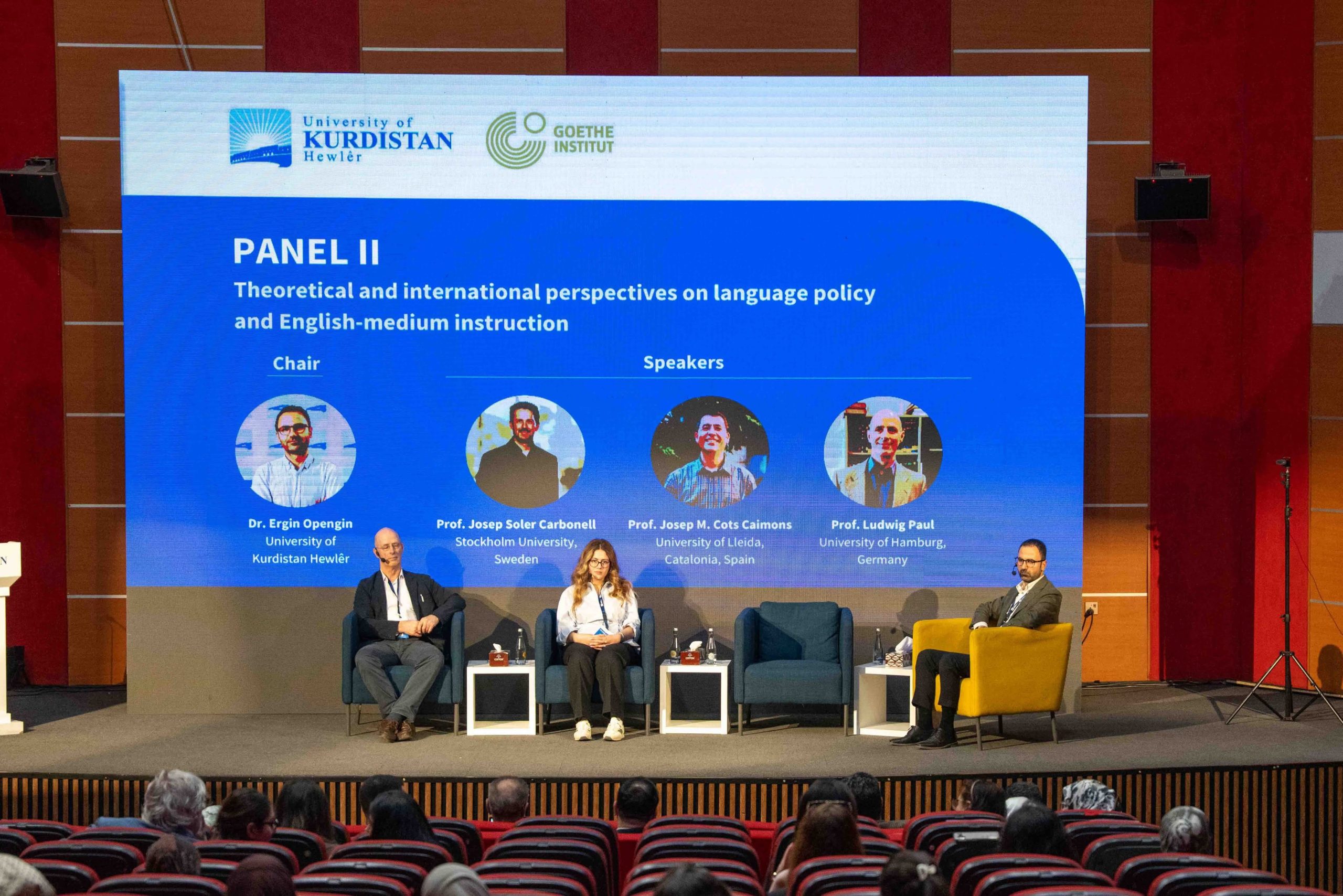
The second panel brought together international academics to discuss theoretical and comparative perspectives on language policy and English-medium instruction. Contributions explored questions of linguistic justice in higher education, the challenges faced by European universities operating in minority-language contexts, and the relationship between World Englishes and multilingual practices in the Kurdistan Region.
The final panel highlighted research by UKH graduates, presenting findings from their postgraduate studies on medium of instruction and language attitudes among Kurdish students, the influence of gender and geography on attitudes towards the Kurdish language, Kurdish language attrition among high school students, and language use and policies in the workplace.
Through academic presentations and discussions, the symposium provided a platform for examining the challenges of language policy and sharing international experiences and research-based perspectives. It also encouraged constructive dialogue on strengthening the position of the Kurdish language in education, research, and wider society, while recognising the importance of multilingualism and international engagement.
The symposium concluded with a summary and closing remarks by Professor Jafer Sheyholislami, bringing together the key themes and discussions from the day.