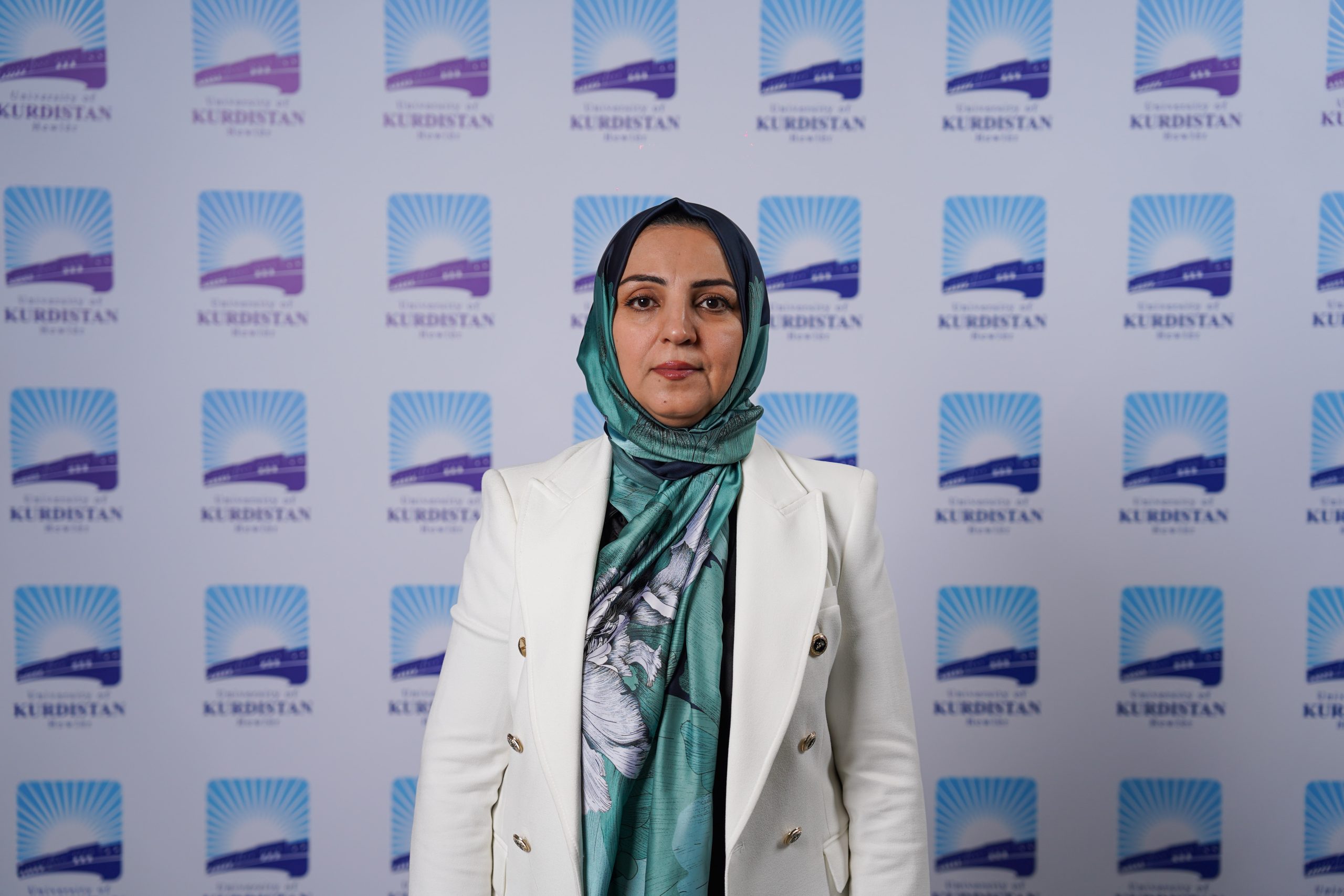

Hallat Rajab Ebrahim, PhD
Assistant Professor in Applied Linguistics
Introduction
Hallat Ebrahim is an Assistant Professor in Applied Linguistics at the University of Kurdistan Hewler. She has been with the Department of English Language since 24th of September 2025. She holds a PhD in English from the University of Leicester in the UK, and MA in ESL (English as a Second Language) from the International Islamic University Malaysia (IIUM) in Kuala Lumpur. She was a former faculty member and the head of the Department of English language at University of Duhok. She has taught courses in Discourse Analysis, Functional Systemic Linguistics, Research Methods, Academic writing, ESP, Syntax, Grammar, Pedagogical Grammar, Semantics, Pragmatics, Second Language Acquisition, TESOL and Teaching methodologies, Curriculum Design and Material Development and Language Skills at a number of Universities in Kurdistan. She led teams involved in course book design, module development, scientific committee leadership, and exam committee at University of Duhok. She was a remote visiting supervisor on the Applied Linguistics Programme at University of Kurdistan Hewler (UKH). She acted as an ESOL Tutor for skills for life at Community Training Portal (CTP) in Nottingham/UK. Her research interests lie mainly in the areas of discourse analysis, critical discourse analysis, sociolinguistics, language and identities, narrative analysis and TESOL and discourse analysis.
Education
- - Ph.D. in English Language, University of Leicester, 2016
- - MA in Human Sciences (English as a Second Language), International Islamic University Malaysia (IIUM), 2004
- - BA in English Language, University of Duhok, 2000
Research
Dr. Hallat Ebrahim’s research interests are the language that people use when they communicate with a focus on storytelling, language, power and identities, teaching and learning English as a second language, identities of refugees and asylum seekers. She has supervised research theses on cultural and linguistic identities of the Asylum seekers in QRG, critical analysis of the denial strategies relative to the Kurdish Question, the impact of English as a lingua franca on the culture and identity in Business Practices in Kurdistan, the relationship between the learners’ critical thinking and their writing skills and the use of AI (gamification) in enhancing the learning skills.