MA in Politics and International Relations
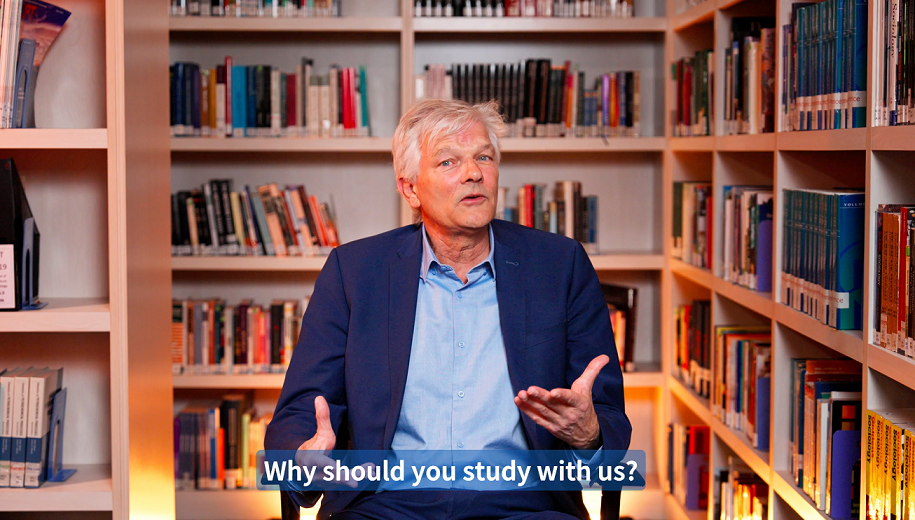
Overview
The MA in Politics and International Relations at the University of Kurdistan Hewlêr is a two-year, full-time postgraduate programme that combines advanced theoretical training, research competence, and policy-relevant analysis. Delivered across four semesters by the School of Social Sciences, the programme is benchmarked at FHEQ Level 7 and carries 120 ECTS credits (240 UK-credit equivalent).
Students progress through a carefully structured academic journey: the first semester builds a foundation in international relations theory, security and strategy, foreign policy analysis, and research methodology. The second semester extends this into the study of the state, comparative politics, international institutions, and global political economy. In the second year, students undertake a substantial piece of independent research — first developing and confirming their dissertation project, then completing a final master’s dissertation of 20,000–30,000 words.
A defining feature of the programme is its dual identity: globally rigorous and regionally grounded. Theoretical and methodological training is applied throughout to the politics of Kurdistan, Iraq, and the wider Middle East, giving graduates both international disciplinary fluency and deep regional insight.
Graduates of the programme are equipped for doctoral study, and for careers in public service, policy analysis, international organisations, media, civil society, and research.
Admission Requirements
- Undergraduate Degree: Completion of a recognised university undergraduate degree, at least to Bachelor level with Honours (or equivalent), in a relevant discipline.
- Undergraduate Degree: Minimum undergraduate average of 60% (equalized transcript is required for students who have graduated from international institutions).
- English Language Proficiency: Minimum English Language requirement is 50 in PTE – 6.0 in IELTS -74 in TOEFL iBT or 105 in Duolingo.
- All applicants are required to submit a valid English language proficiency test from the list above, including graduates of English-medium universities.
- School Interview.
- Reference: Two references which indicate capacity to undertake postgraduate studies, at least one of which will be from an academic who has taught the applicant.
- Equalised transcript is required for students who have graduated from international institutions.
- Application Form: Online application form is required.
- Official Transcripts: Provide a copy of your undergraduate transcript with your application.
- A copy of your passport and national ID.
Curriculum
| Semester | Code | Module title |
| Semester 1 | POL501 | Theories of International Relations: Traditions and Debates |
| Semester 1 | POL502 | Security and Strategy in International Politics |
| Semester 1 | POL503 | Foreign Policy Analysis: Theory and Practice |
| Semester 1 | POL504 | Research Design and Methodology in Politics and International Relations |
| Semester 2 | POL505 | The State, Power, and Global Order |
| Semester 2 | POL506 | Comparative Politics: Concepts, Theories, and Cases |
| Semester 2 | POL507 | International Institutions and Global Governance |
| Semester 2 | POL508 | Global Political Economy: Ideas, Institutions, and Power |
| Semester 3 | POL601 | Dissertation Research Design and Development |
| Semester 4 | POL602 | Master’s Dissertation in Politics and International Relations |
Skills Development
Skills You Will Develop
The MA in Politics and International Relations is designed to build a rounded set of academic, analytical, and professional skills that extend well beyond subject knowledge.
Critical and Theoretical Thinking
Students learn to interrogate assumptions, compare rival theoretical explanations, and construct coherent, evidence-based arguments — moving beyond description to genuine critical analysis.
Research Skills
The programme builds strong research capabilities from the ground up: formulating significant research questions, positioning them within existing scholarship, and designing and conducting rigorous qualitative, quantitative, or mixed-method research with full methodological transparency and ethical awareness.
Analytical and Evaluative Reasoning
Students develop the ability to apply comparative, causal, and interpretive reasoning, and to judge the quality, reliability, and limitations of evidence — essential for both academic research and real-world policy analysis.
Regional and Global Application
A distinctive strength of the programme is training students to apply global theory to the politics of Kurdistan, Iraq, and the wider Middle East, while sustaining meaningful comparative perspective — producing graduates who can operate confidently at both regional and international levels.
Communication Skills
Through written assignments, policy briefs, and oral defences, students build the ability to communicate complex analysis clearly and persuasively across academic, policy, and professional formats and audiences.
Digital and Analytical Tools
Students gain hands-on experience with statistical and qualitative-analysis software, data interpretation, and bibliographic and research-management tools, developing digital competence that is used responsibly and reproducibly.
Independent and Professional Working
The programme cultivates intellectual autonomy, reflexivity, and professional responsibility — the ability to manage sustained, independent postgraduate work, meet deadlines, and take ownership of a substantial research project from design through to completion.